


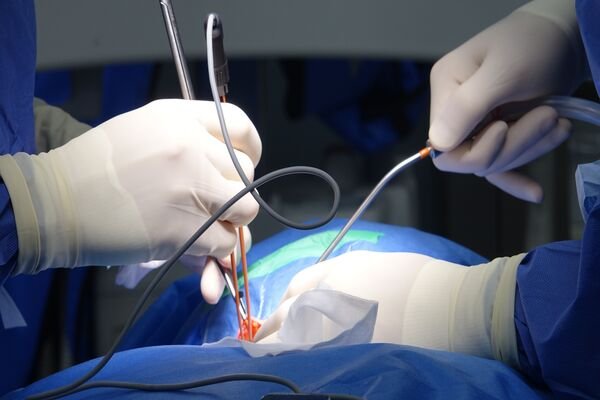
General Surgery Billing
Maximize your surgical revenue with our specialized billing services for general surgery. We handle global billing periods, new 2026 CPT codes, NCCI editions, and denials to protect your practice's income.
General surgery billing is not limited to the evaluation and management coding applied to office-based surgical cases; it is a high-stakes revenue cycle discipline where a single error in the overall billing period for a $12,000 procedure can result in an underpayment of $1,200, recorded as a "contractual adjustment" and permanently written off. With 418 CPT code changes taking effect in 2026 and an estimated loss of over $232,000 annually per surgeon due solely to overall billing period confusion, the need for specialized billing expertise is greater than ever.
At MedMaxbill, Inc., we offer comprehensive general surgery billing services designed to manage these complexities on your behalf. Our team of certified billing specialists understands the specific revenue cycle requirements of general surgery, from global package management and NCCI compliance to the new 2026 CPT codes and payer-specific modifier protocols, ensuring your practice gets every dollar it earns while maintaining full regulatory compliance.
The 2026 General Surgery Billing Landscape: Major Changes
The year 2026 brings significant changes to coding and payments that directly impact general surgery practices.
Efficiency Adjustment to Work Relative Value Units (RVUs)
CMS finalized a 2.5% “efficiency adjustment” that reduces work RVUs for nearly all non-time-based services in 2026, with further reductions planned every three years indefinitely. This policy applies to nearly all non-time-based codes, including global surgical codes, which did not receive the corresponding Evaluation and Management (E/M) adjustments applied in 2021 and 2023. The American College of Surgeons actively opposes this policy, noting that research shows surgical times have increased by more than 3% since 2019, as have all measures of patient complexity.
Changes to Practice Expense Methodology
CMS also finalized a halving of the proportion of practice expense (PE) UVRs based on work UVRs allocated to hospital settings. This change applies to all clinic services, even those provided by an independent practitioner without an employer covering their overhead.
Conversion Factor Update
The Medicare conversion factor for 2026 for nonqualified (non-QP) providers is $33.40 (a 3.26% increase from 2025) and $33.57 for qualified (QP) providers (a 3.77% increase).
New and Revised CPT Codes for General Surgery
The 2026 CPT update includes 288 new codes, 84 deleted codes, and 46 revised codes. Key changes for general surgery include:
Endoscopic sleeve gastroplasty: New CPT code 43889 for transoral ESG procedures, with an overall period of 90 days.
Lower extremity revascularization: The long-standing LER codes 37220-37235 were eliminated and replaced with 46 new territorial codes (37254-37299) that group vascular access, the procedure, and all intraoperative imaging.
Percutaneous IRR of liver tumors: Category III code 0600T was eliminated and replaced with the new Category I code 47384, with an overall period of 0 days.
Endovascular repair of thoracic aortic aneurysms: Changes to TEVAR coding include new codes for thoracic branch endoprosthesis procedures, with catheter placement and imaging now integrated into the main procedure.
Baroreflex activation therapy: New codes were established for BAT system implantation for the treatment of resistant hypertension or heart failure.
Colonic motility studies: Codes 91120 and 91122 have been removed and replaced with two new codes that reflect current services.
Terminology update: The term "peritoneoscopy" has been completely removed from the CPT code set.
The Most Costly General Surgery Billing Errors
Revenue Loss During the Global Period
The 90-day global period is the primary source of revenue loss for general surgery clinics. A clinic performing 45 major surgeries per month faces potential losses of between $320,000 and $780,000 annually due to three common deficiencies during the global period:
Cancelled Unrelated Postoperative Services ($82,560 Loss):
Patients who present with unrelated conditions during the global period should be billed using modifier 24; however, many clinics cancel these visits. Day 32 post-cholecystectomy with upper respiratory infection is billed separately using code 99213-24.
Complications Requiring Surgical Reintervention ($89,280 Loss):
When complications require surgical reintervention, modifier 78 should be applied at a reduced rate (70%). Many clinics assume these services are included in the overall package and do not bill for them.
Underreimbursed Staged Procedures (Loss of $60,480):
Planned staged procedures require Modifier 58 for full reimbursement, not Modifier 78 with the reduced 70% rate. The difference can cost $1,260 per incorrectly modified procedure.
NCCI Compliance and Modifiers
NCCI editions significantly impact general surgery claims involving multiple procedures, requiring the accurate use of modifiers to avoid bundling editions. Common risks include the misuse of Modifier 59 to avoid editions without proper documentation, reporting "separate procedure" codes when performed in the same visit as another anatomically related procedure, and the misuse of Modifier 51 for multiple procedures.
Deficiencies in ICD-10 Specificity
Insurers require specificity in ICD-10 coding for surgical claims. Diagnosis codes lacking the seventh character specificity for fracture, injury, or stage of consultation trigger an immediate medical necessity review or denial. Each omitted detail of specificity adds an extra layer of review, delaying reimbursement by 15 to 30 days.
Our Comprehensive General Surgery Billing Services
Comprehensive Management of Surgical Periods and Packages
We track each 90-day global period, ensuring that routine postoperative services are not billed separately. Our team identifies:
Unrelated postoperative visits requiring modifier 24
Complications requiring surgical reintervention with modifier 78
Planned staged procedures requiring modifier 58 at full rate
Surgical reintervention for staged procedures with modifier 58
Support for the Transition to 2026 CPT Codes
We ensure that all claims use the updated 2026 codes, including 43889 (ESG), 47384 (percutaneous hepatic IRE), and the 46 new LER codes (37254-37299). Our team monitors deleted codes (37220-37235, 0600T, 91120, 91122) to prevent denials.
Compliance with NCCI Editing and Modifier Guidelines
We perform NCCI editing checks prior to submitting each surgical claim, ensuring:
- The correct use of modifier 59 only when supported by documentation.
- The appropriate application of modifier 51 for multiple procedures.
- Precise use of modifier 22 for more complex procedures with detailed documentation.
- Modifier 50 for bilateral procedures only in primary codes (not in additional codes).
Prior authorization management
We manage prior authorizations for complex surgical procedures, including new technology codes, with integrated workflows per CPT code.
Validation of ICD-10 specificity
Our certified coders ensure the specificity of the seventh character for fracture, injury, and stage of care diagnostic codes, validating the anatomical laterality and stage of care for each surgical claim.
Management of denials and appeals
Each denied claim is reviewed and appealed with supporting documentation, including analysis of the overall period and procedure-specific modifiers. We implement preventative strategies based on denial trend analysis.
Reports and Analytics
We provide real-time revenue cycle management performance dashboards that cover collections, denial rates, accounts receivable aging, and payer-specific trends by surgeon and procedure type.
Why MedMaxbill for General Surgery Billing?
Specialized Surgical Expertise:
Our team works exclusively on surgical cases, encompassing comprehensive period tracking by procedure type, NCCI compliance, and payer-specific modifier logic.
2026 Compliance Ready:
We stay current with changes to CPT 418 code, the 2.5% efficiency adjustment, the new LER coding, and all CMS guideline updates.
Proactive Denial Prevention:
By identifying gaps in overall period tracking, validating ICD-10 specificity, and ensuring modifier compliance, we significantly reduce denial rates.
Overall Period Revenue Recovery:
We prevent the annual loss of over $232,000 due to canceled non-related visits, unbilled complications, and underpaid staged procedures.
Real-Time Operating Room Integration:
We record every procedure, implant, and add-on at the point of care by integrating with the operating room record.
Dedicated support:
You'll have access to a dedicated account manager who understands your practice and is available to answer questions and provide updates.
Partner with MedMaxbill for General Surgery Billing Success
Billing in general surgery requires a specialized approach. With changes to CPT 418, the 2.5% efficiency adjustment, new vascular and endoscopic coding, and the loss of revenue for global periods, generalist billing companies often miss out on significant revenue and expose clinics to the risk of regulatory noncompliance.
At MedMaxbill, we combine industry expertise, advanced technology, and continuous monitoring to ensure your general surgery practice maximizes revenue and maintains regulatory compliance in 2026 and beyond.
Partner with MedMaxbill, Inc. and enjoy the peace of mind that comes with expert general surgery billing services. Let us handle the complexities of billing so you can focus on what matters most: providing exceptional surgical care.
