


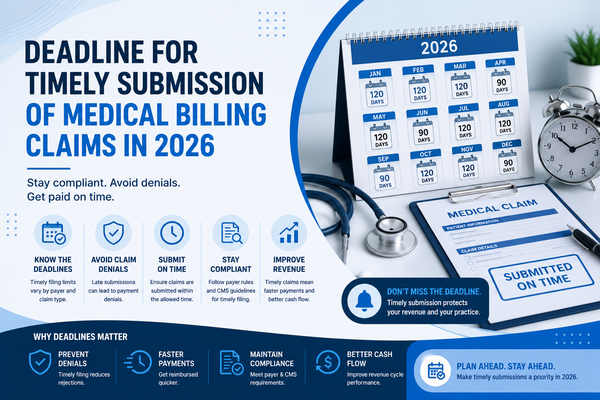
Deadline for Timely Submission of Medical Billing Claims in 2026
Meeting claims filing deadlines remains one of the crucial requirements in medical billing and revenue cycle management. Missing a filing limit can result in claims denials, reimbursement delays, and lost revenue for healthcare providers. As insurance provider requirements grow, understanding medical billing claim filing deadlines in 2026 is vital for maintaining positive cash flow and reducing claim rejections.
What Is a Timely Filing Limit?
The claims deadline is the maximum period the insurer allows for filing a medical claim after the date the patient received the service. Claims submitted after this deadline are generally rejected, except in specific cases.
Healthcare providers, billing teams, and revenue cycle management professionals must be aware of each insurer's claims filing deadlines to ensure claims are submitted accurately and on time.
Why Timely Filing Limits Matter?
Failure to meet the deadlines for submitting claims may result in:
- Permanent claim denial
- Reduced reimbursement rates
- Increased accounts receivable
- Higher administrative costs
- Loss of revenue for healthcare organizations
Implementing effective claims management processes helps clinics avoid these costly problems.
Medicare Timely Filing Limit in 2026
For fee-for-service Medicare claims, providers generally have:
The deadline for filing a complaint is 12 months (365 calendar days) from the date of service.
Claims submitted after this one-year period are generally denied, except in limited cases such as administrative errors or circumstances beyond the provider's control.
Medicare Advantage Plans
Medicare Advantage plans can establish their own reporting requirements.. Depending on the insurer, reporting deadlines can range from 90 to 365 days. Providers should always verify the specific contractual terms of each plan.
Medicaid Timely Filing Limits in 2026
The deadlines for filing Medicaid claims on time vary by state. Most state Medicaid programs require claims to be filed within:
- 90 days
- 180 days
- 365 days
Since Medicaid rules vary from state to state, providers should periodically review their state's Medicaid billing guidelines to ensure compliance.
Commercial Insurance Timely Filing Limits
Commercial insurance companies set their own deadlines for filing claims. The most common filing deadlines include:
| Payer Type | Common Filing Limit |
|---|---|
| Commercial Plans | 90–180 Days |
| PPO Plans | 90–180 Days |
| HMO Plans | 90–365 Days |
| Workers' Compensation | Varies by State |
Always review insurer contracts and provider manuals, as document submission limits can vary significantly.
Common Reasons for Missing Timely Filing Deadlines
Several factors contribute to the late filing of claims:
Incorrect information about insurance can delay the processing and resubmission of the claim.
The lack of modifiers, errors in the diagnostic coding, and incomplete documentation are usually the cause of the rejection of claims.
Failure to obtain prior authorization may delay the filing of the claim.
Staff Shortages
A lack of resources for billing can lead to delays and missed deadlines.
Inefficient Revenue Cycle Processes
Manual workflows and poor claims tracking systems increase the risk of late filings.
Best Practices to Meet Timely Filing Requirements
Healthcare organizations can improve claims acceptance rates by implementing the following strategies:
Verify Insurance Eligibility Early
Whenever possible, confirm the patient's insurance coverage before the visit.
Submit your claims within a few days of receiving the notification, instead of waiting until the deadline approaches.
Monitor Claim Status Regularly
Track claims through the clearinghouse and insurer portals to quickly identify problems.
Use Billing Automation Tools
Automated claims management systems help reduce human error and improve response times.
Maintain Accurate Documentation
Complete clinical documentation supports the accuracy of coding and reduces the rejection of claims.
Train Billing Staff
Regular training keeps staff up to date on changes in insurer requirements and billing regulations.
How MedMaxBill Helps Providers Avoid Timely Filing Denials
At MedMaxBill, we understand that missing claims deadlines can significantly impact healthcare revenue. Our experienced medical billing specialists help providers streamline claims submission, monitor insurer requirements, resolve issues promptly, and maximize reimbursement opportunities.
Our comprehensive revenue cycle management services include:
- Medical billing and coding
- Claims submission and tracking
- Denial management
- Accounts receivable tracking
- Eligibility verification
- Pre-authorization support
- Revenue cycle optimization
By partnering with MedMaxBill, healthcare providers can reduce administrative burden, improve collections, and meet insurer reporting requirements.
Final Thoughts
Meeting application deadlines remains a critical component of successful medical billing in 2026. Whether it's Medicare, Medicaid, or commercial insurers, providers must understand each payer's specific timelines and implement efficient billing workflows to avoid unnecessary denials.
A proactive revenue cycle management strategy, combined with the support of billing experts, can help healthcare organizations maintain regulatory compliance, accelerate reimbursements, and improve their financial performance.
Do you need help managing claims and avoiding late-filing denials? Consult a free Audit today to discover how our medical billing experts can contribute to the success of your practice's revenue cycle.
